5 Reasons Why Your Organization Needs CRM Software are easy to see in today’s fast-moving business world. Building good relationships with customers is more important and harder than ever.
A CRM system boosts your efficiency. It allows you to manage leads in an organized way. You can easily track your sales activities. It helps you interact with customers across multiple channels.
These channels include phone calls, emails, and social media. It makes it easy to send quotes to potential customers. It also helps you understand customer buying behavior over time.
In this blog, we’ll explore 5 reasons why your organization needs CRM software today.
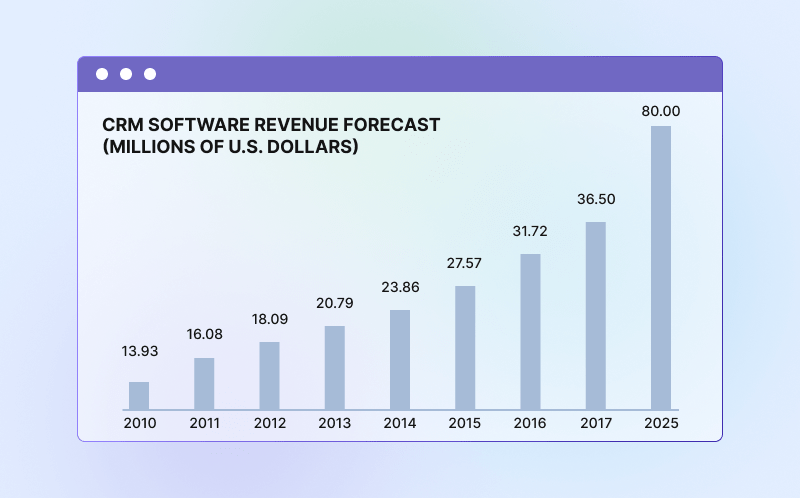
As we can see, CRM software continues to lead technology investments, with an increasing number of businesses planning to boost their IT budgets in the coming years.
The global CRM market is projected to reach $99 billion in 2025, up from $88 billion in 2024, marking an estimated 12% year‑over‑year increase
Let’s explore the top reasons why your organization should start using CRM software.
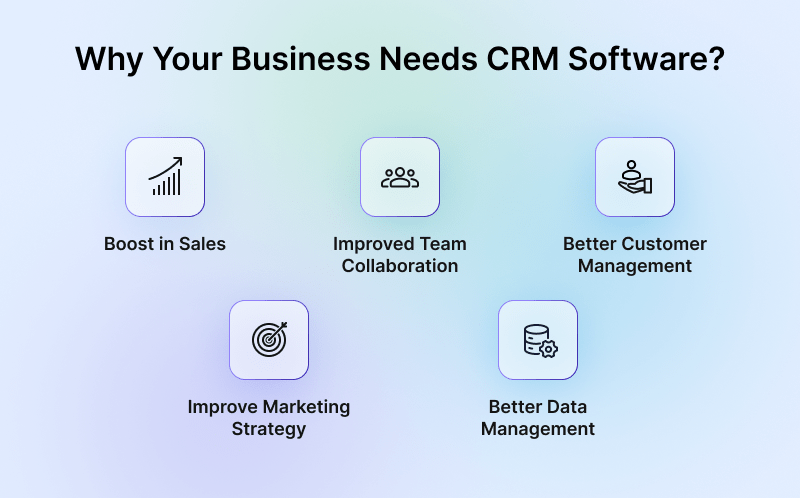
Why Your Business Needs CRM Software?
A CRM helps you keep all your customer information in one place. It makes it easy to manage leads, track sales, and improve customer service. This saves time and helps your business grow faster.
1. Boost in Sales
A good CRM will help organizations convert opportunities into revenue. So that the sales team can easily segment their customers through various parameters like activity, sources, types, etc.
Using CRM, you can set strong follow ups with your customers. So, you can offer them cross selling and upselling products.
2. Improved Team Collaboration
Everyone on your team can access the same customer data. This helps the sales, support, and marketing teams work together smoothly.
Adopting a good CRM for your sales team and providing them more time to focus on customers. A CRM helps you automate or remove manual tasks.
This includes contact management. Lead management can be automated as well. In short, CRM saves time by reducing manual work.
3. Better Customer Management
Good customer support software is crucial for any business. Today’s customers expect quick and easy access to help whenever they need it.
To provide good and quick customer service, you must have complete information about customers.CRM software stores all customer details in one place.
You can see past conversations, orders, and preferences. This helps you give more personal and faster support.
4. Improve Marketing Strategy
CRM helps you target the right customers more accurately. To grow your business, it’s important to look at past data and plan smart marketing campaigns.
It also provides a sales pipeline, a visual tool that shows your sales process in detail. This helps you track how well your marketing campaigns are doing and where to improve.
5. Better Data Management
Without a CRM, your customer data can become messy and hard to manage. In sales, having all customer details in one place is key.
CRM keeps everything organized, past interactions, contact info, and purchase history. This saves time and helps your team respond faster and more efficiently.
CRM software is a tool that helps businesses stay organized. It improves customer relationships. It also helps boost sales. With better data management, businesses can make smarter decisions.
Conclusion
CRM brings everything together in one place for easy access. No matter the size of your business. Using a CRM can make your team more efficient and your customers more satisfied. It’s a smart investment for long-term growth and success.
With an Open Source CRM like KrayinCRM, your organization gains full control, flexibility, and the freedom to customize your customer management system as your business grows.
Originally Post - https://krayincrm.com/5-reasons-why-your-organization-needs-crm-software/
Comments
Post a Comment